Coinage from the Province of La Rioja, 1824-29
By Mariano Cohen (translated by Fátima Madonna, edited in English by Daniel Sedwick, the original Spanish edition first published in Buenos Aires, Argentina, in the Aportes de Numismática e Historia (Vol. II, 2015) of the Instituto Bonaerense de Numismática y Antigüedades, compiled by Arnaldo J. Cunietti-Ferrando (Buenos Aires, Argentina])
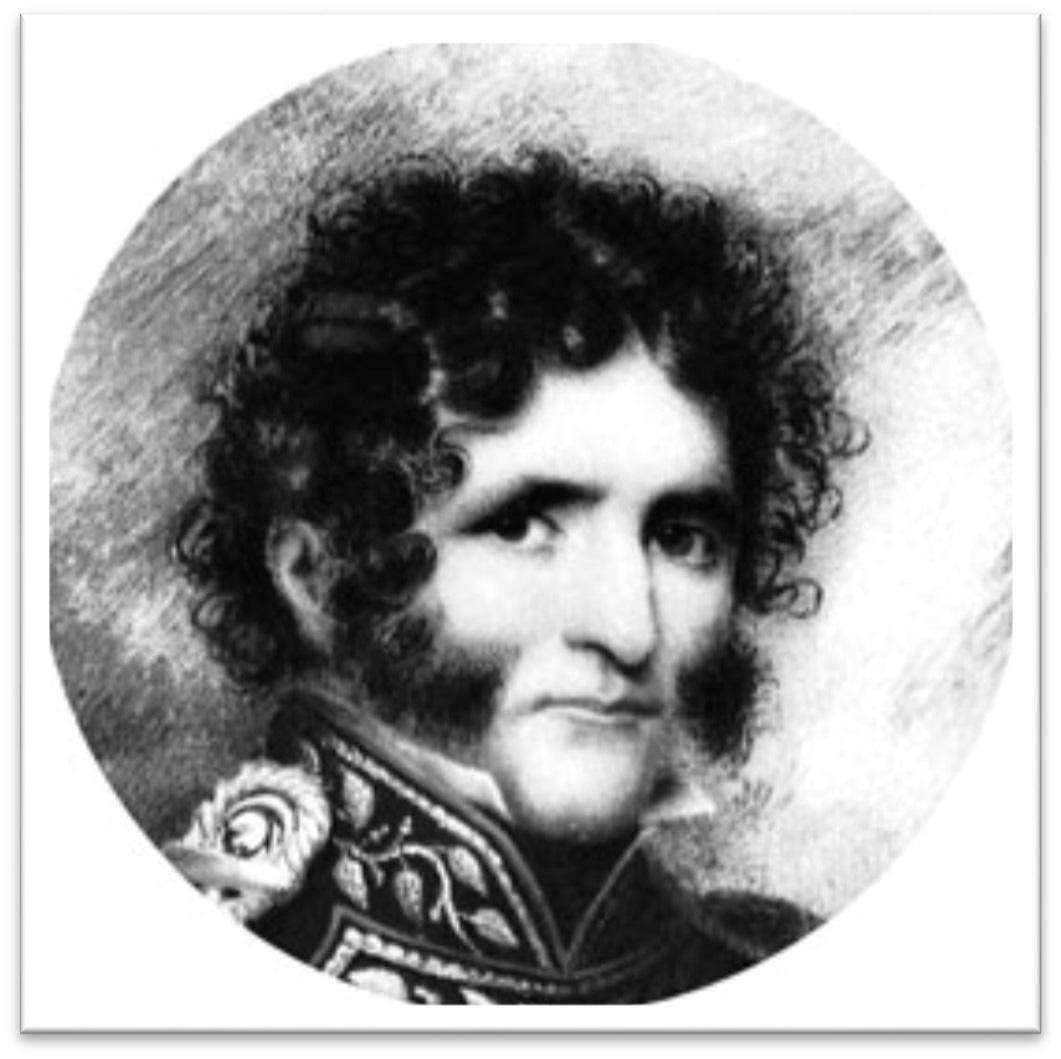
This article could be titled “La Rioja coins
during the rise of Facundo Quiroga.” (1)
We start in 1823, which began with Quiroga in a struggle against the governor,
Nicolas Dávila, who had set up government in Chilecito for the purposes of minting
new coins and, in doing so, needed to get rid of the influence from “El Tigre de los Llanos” (Facundo
Quiroga).
After long months of comings and goings and
attempts at negotiation, the dispute was resolved (in Quiroga’s favor) by the
battle of “El Puesto” in March of 1823. It was a minor event in that
there were only five casualties, all on the part of the governor, but including
one of his brothers. Dávila’s great-grandson, the distinguished Joaquin V.
González, in his famous book Mis montañas
(My Mountains), dedicated a chapter to
him titled “El coronel Don Nicolas Dávila”
(“The Colonel Mr. Nicolas Dávila”).
After El
Puesto, Quiroga took over the government for just three months and handed
over power to Don Baltazar Agüero in July; this next governor was a key figure
in the first official coinage made in La Rioja.
On March 26, 1824, the provincial Board of Representatives announced to the five provincial departments the upcoming issue of monedas de cordoncillo (milled-edge coins), and on March 31 two dozen samples were sent to each department. We assume that the coins sent were of the 1-real denomination, since the author Jorge Ferrari mentions he owns a letter from that date on which a wax seal of the design of the 1-real coin can be seen.
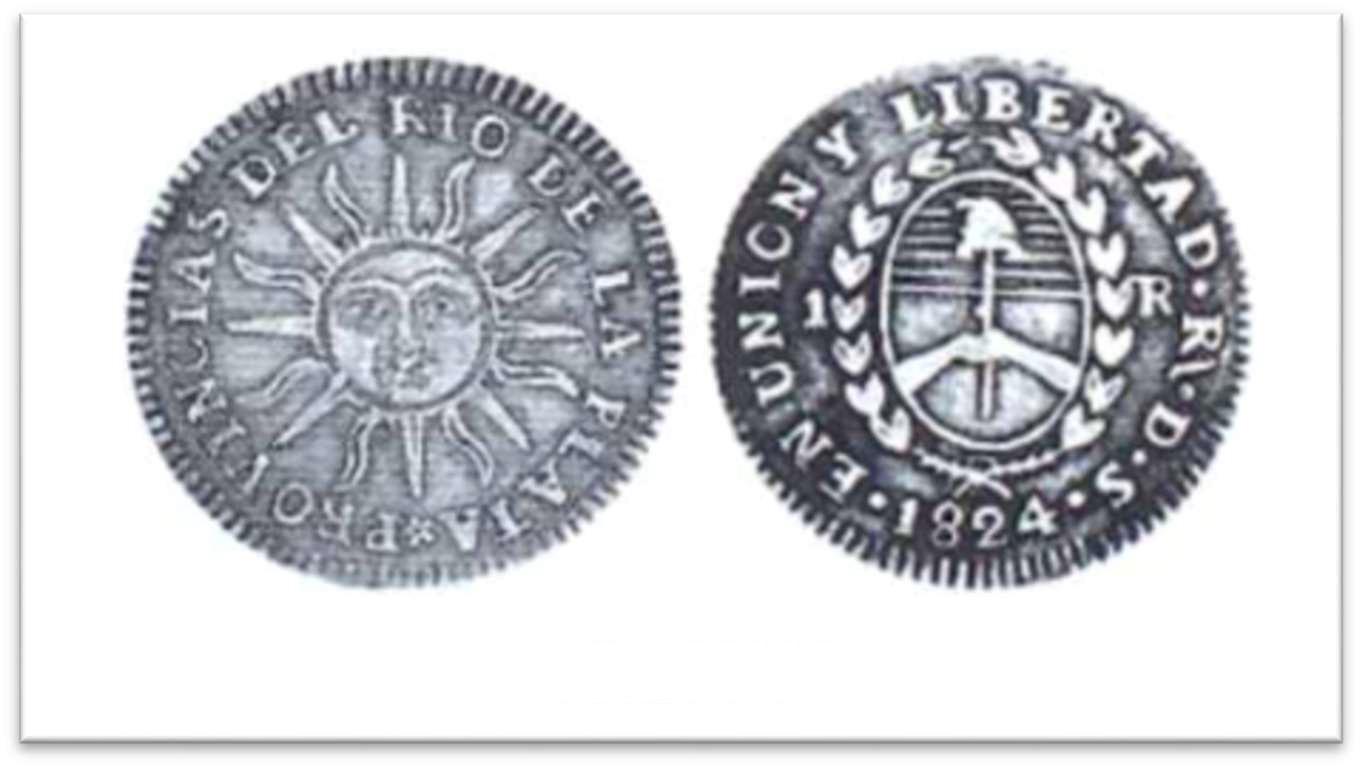
1 REAL 1824
From this early date, Quiroga is a key figure,
for many documents in his archives account for his almost daily contact with
the governor and the mayor of the capital city, asking for help, money, and copper,
and mentioning the most meticulous details on the progress of the minting work.
On April 2 a dozen coins were sent to Córdoba,
and the same amount to Buenos Aires, requesting that they be accepted for
circulation in those provinces, and expressing thanks for the supplied help,
especially for copper and tools. Without a doubt the coins’ acceptance was key,
and for that reason the coins bore the national arms and legends similar to the
monedas patrias (made in Potosí) made
in 1813 and 1815.
On May 6 the governor told Quiroga that they had not minted gold yet because the interested parties (capitalists) had not decided to do so and were waiting for the response from Buenos Aires and Córdoba about circulation of the silver coins. However, on May 24, two gold pieces of 2 escudos were sent to both provinces; the early documents only mention delivering coins and metals without many details. These documents can be found in the National Archives (Archivo General de la Nación).
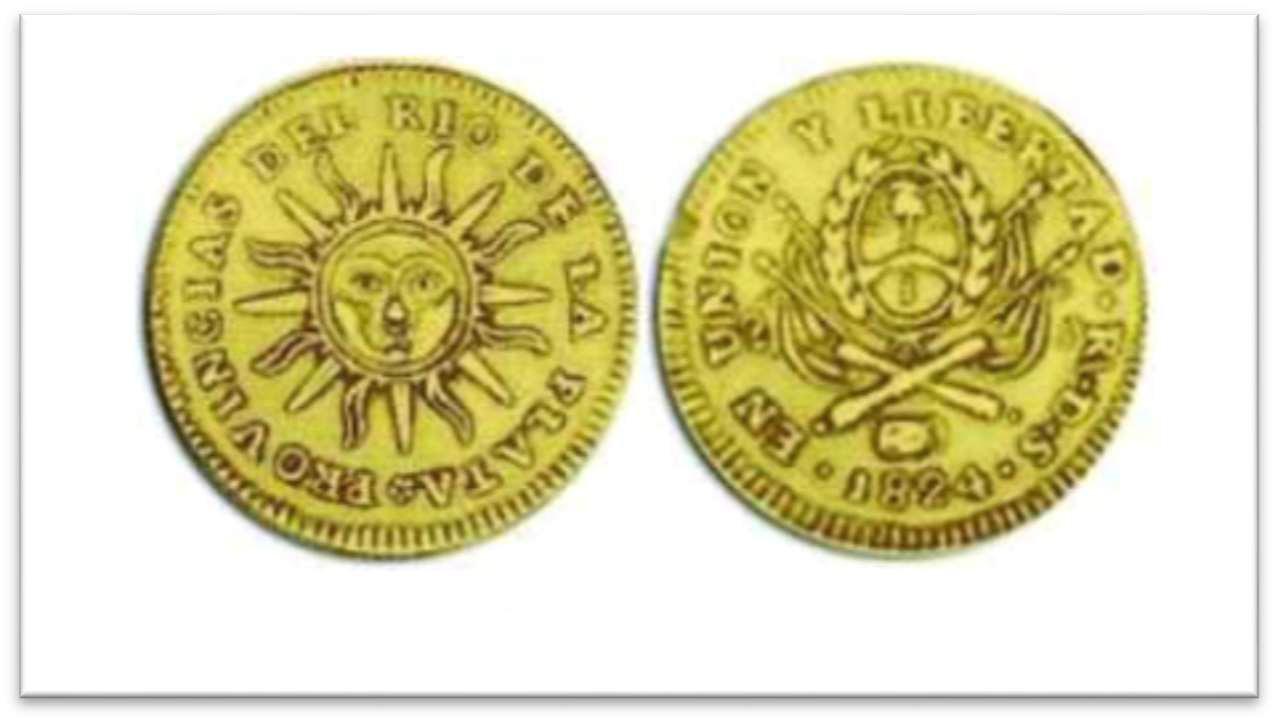
2 ESCUDOS 1824
On July 9 new pieces were sent; we can only suppose they were 2 soles, which hadn’t been sent before, because we know there were three deliveries before September 2 whose denominations were expressly mentioned in detail as 1 real, 2 soles and 2 escudos.
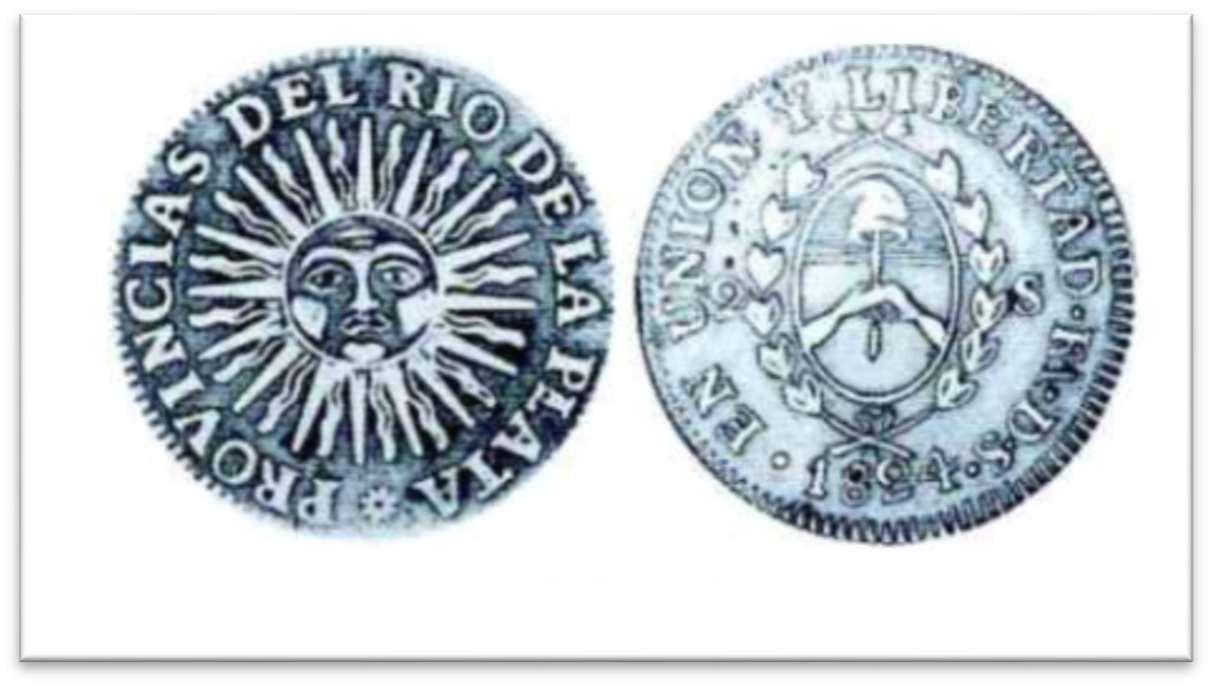
2 SOLES 1824
The government of Buenos Aires requested
details on the minting, to which La Rioja answered that for gold in fineness of
22 karat they made 68 escudos per marco
and for silver in fineness of 11 dineros they made 68 reales per marco, superior to the Potosí coins, at
least at the time. We have analyzed the 1 real at the National Institute of
Technology and Industry (INTI) and the result was 94% silver and 6% copper. We
suppose that La Rioja was very careful with the coins sent to other provinces,
although of course this could not be verified for all the coins.
These pieces show the letters DS, which despite
wide debates have not been deciphered to date. The only theory that comes to
mind is “Sociedad de Directores” (Directors’
Society), since the investment behind the striking was made by private
capitalists, or some other department or district name in La Rioja with the
initial S, unbeknownst to us.
On August 14 Agüero sent a public announcement
inviting all the neighbors from La Rioja to form a commercial association to
run the mint because the state did not have enough funds to make it work. As he
did not succeed, on October 23 he decided to extend the benefits, and on November
16 he called a meeting for the shareholders. They must have decided to go ahead
with the investment, for the next day another public announcement invited
whoever has colonial silver bullion piñas (2) and scrap to sell them to the city treasury at a beneficial price. They also
decided to close the subscription—each of them had put 1000 pesos into it—and to
invite all the departments in the province to join in, explaining that there
would be a new meeting on February 15, 1825, and that they agreed to begin,
with a quarter of the shares at that moment, the “Sociedad de Buenos Aires para trabajar el Mineral de Famatina”
(Buenos Aires society for working the minerals of Famatina). This very important event will be
referred to later.
In January 1825, Augusto Faucon (or Fauçon)
arrived at La Rioja with a letter of recommendation from Braulio Costa
contracting him to build machinery for the new mint. On February 3 Agüero writes to Quiroga asking him to join in as
shareholder because it is very important that he is seen to be a part of it,
and Quiroga immediately sends the corresponding 1000 pesos.
In the above-mentioned meeting in February, it
was said that seven thousand pesos were collected, one thousand per
shareholder, and that Sociedad de Buenos
Aires should put in 1000 pesos more to complete the quarter part of the
company. That last share would be in materials, officially beginning their operation.
It was also declared that profits would be shared as two tenths for the state,
two tenths for the Sociedad de Buenos
Aires, and one tenth for each of the six remaining shareholders, being of
equal percentage in their investment.
In contrast to another reference work, we
believe that 1 real and 2 soles pieces with the lettering RA CA were issued
from this time; the 1 real being very rare (less than 5 pieces known) and the 2
soles very scarce, even though 4 varieties of obverse and 3 varieties of
reverse and their various combinations are known at present, thanks to superb
die-study by Carlos Janson. Mitchell maintained in his great work that these
coins were only minted between July and August, but he did not know the
varieties we are lucky enough to be able to analyze today.
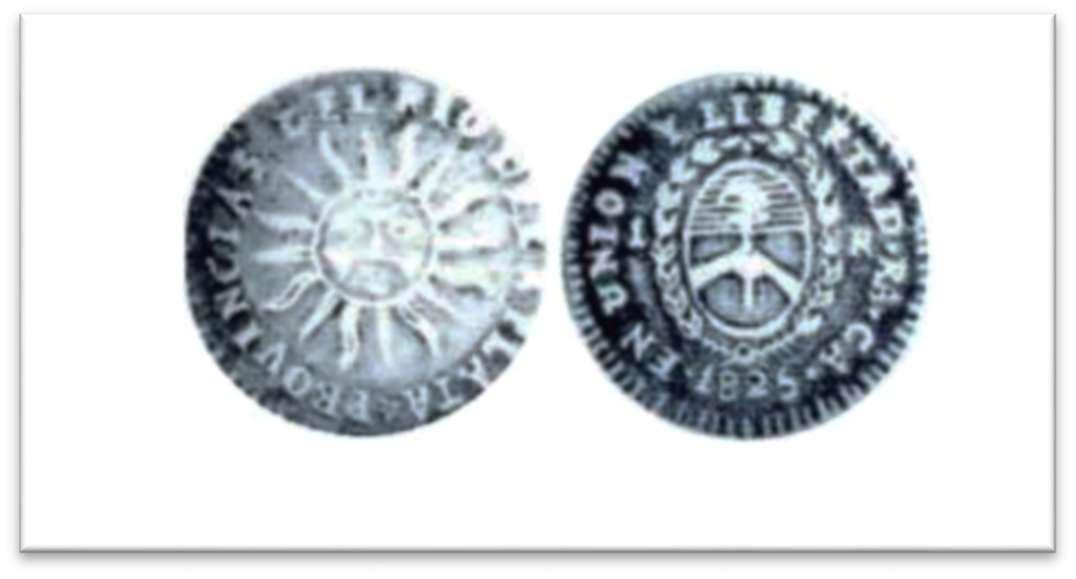
1R RA CA
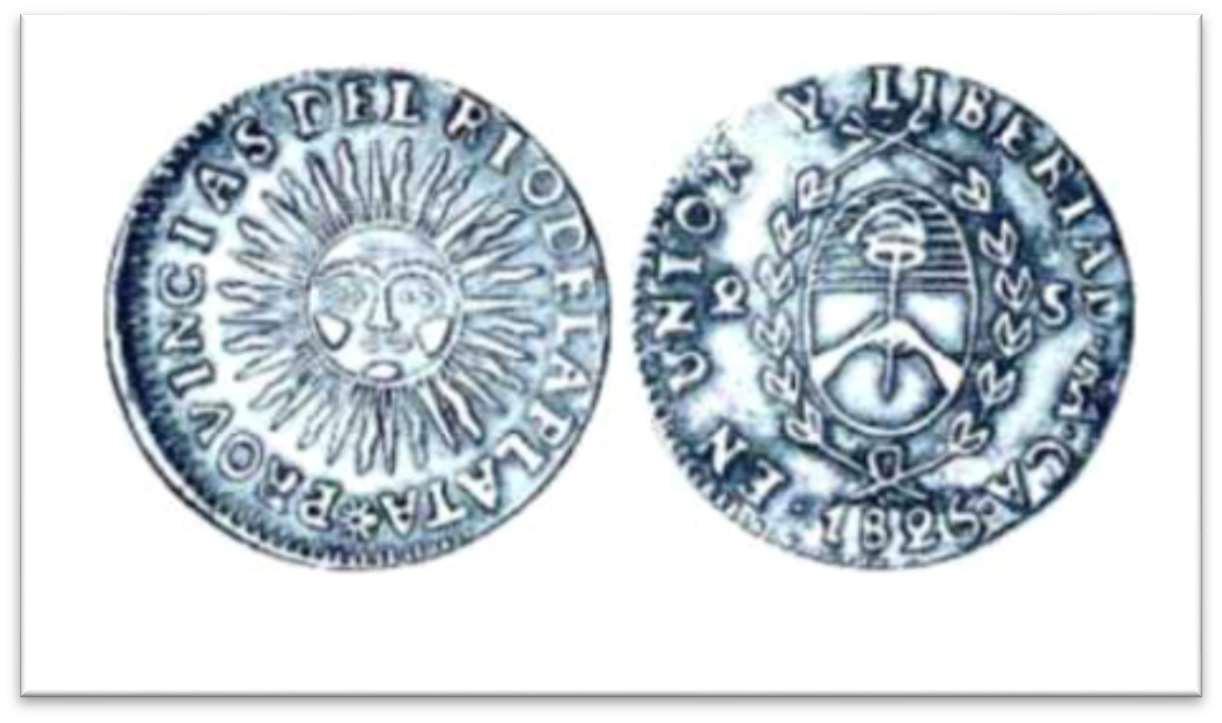
2S RA CA
On July 28 the shareholders of the mint gathered
and balanced accounts in order to pay back to each one of them the initial
share of capital on August 29. The parties agreed to close the company because
of their interest in a new bailout bank, whose
full status we know thanks to Carlos Segreti. It was approved by the government
in September. It is worth mentioning that many of the shareholders were
political authorities or relatives. The exact name was “Banco de Rescates y Casa de Moneda” (bailout bank and mint),
established in La Rioja.
We must remember that the former company had an available capital of 8000 pesos. The new company would issue shares of 500,000 pesos, being 2500 shares of 200 pesos to be sold in the London stock market, taking into account that collecting half that amount of capital would begin the work in the mint. The 2 soles with lettering “CaDeBas” would come from this period, being much more abundant than the previous issue, but with a similar amount of dies: 5 obverses and 4 reverses. There was also a scarce 2 escudos with the same lettering.
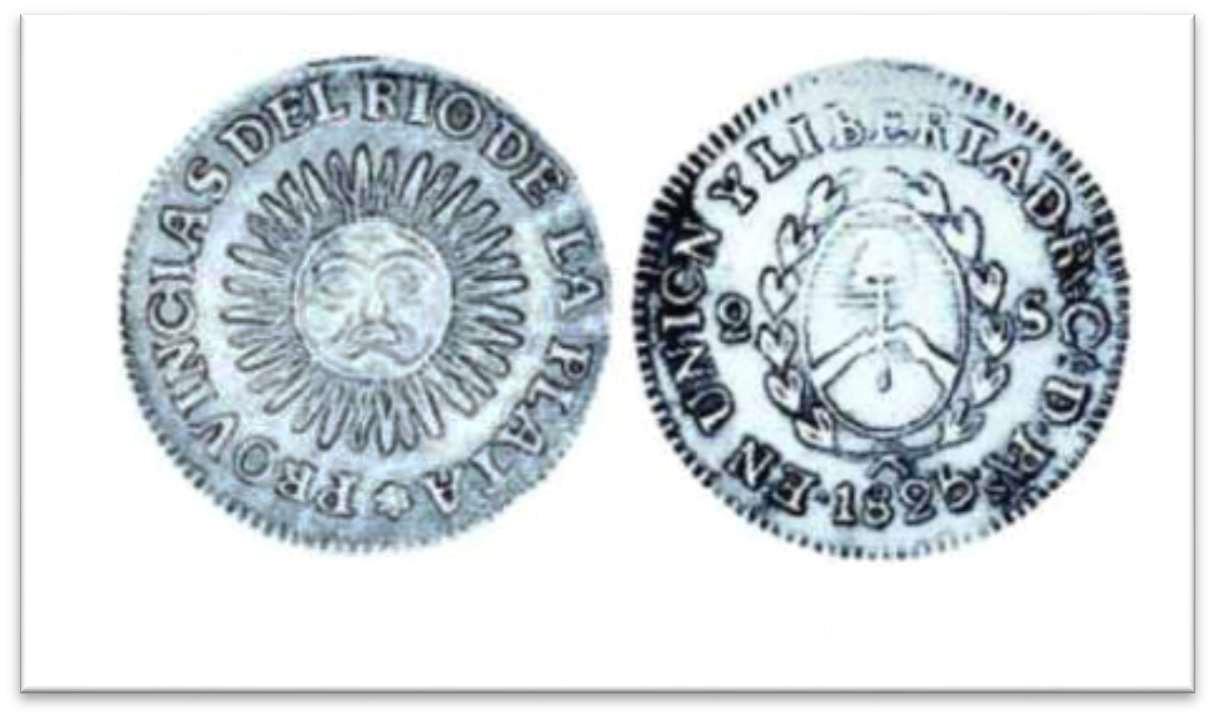
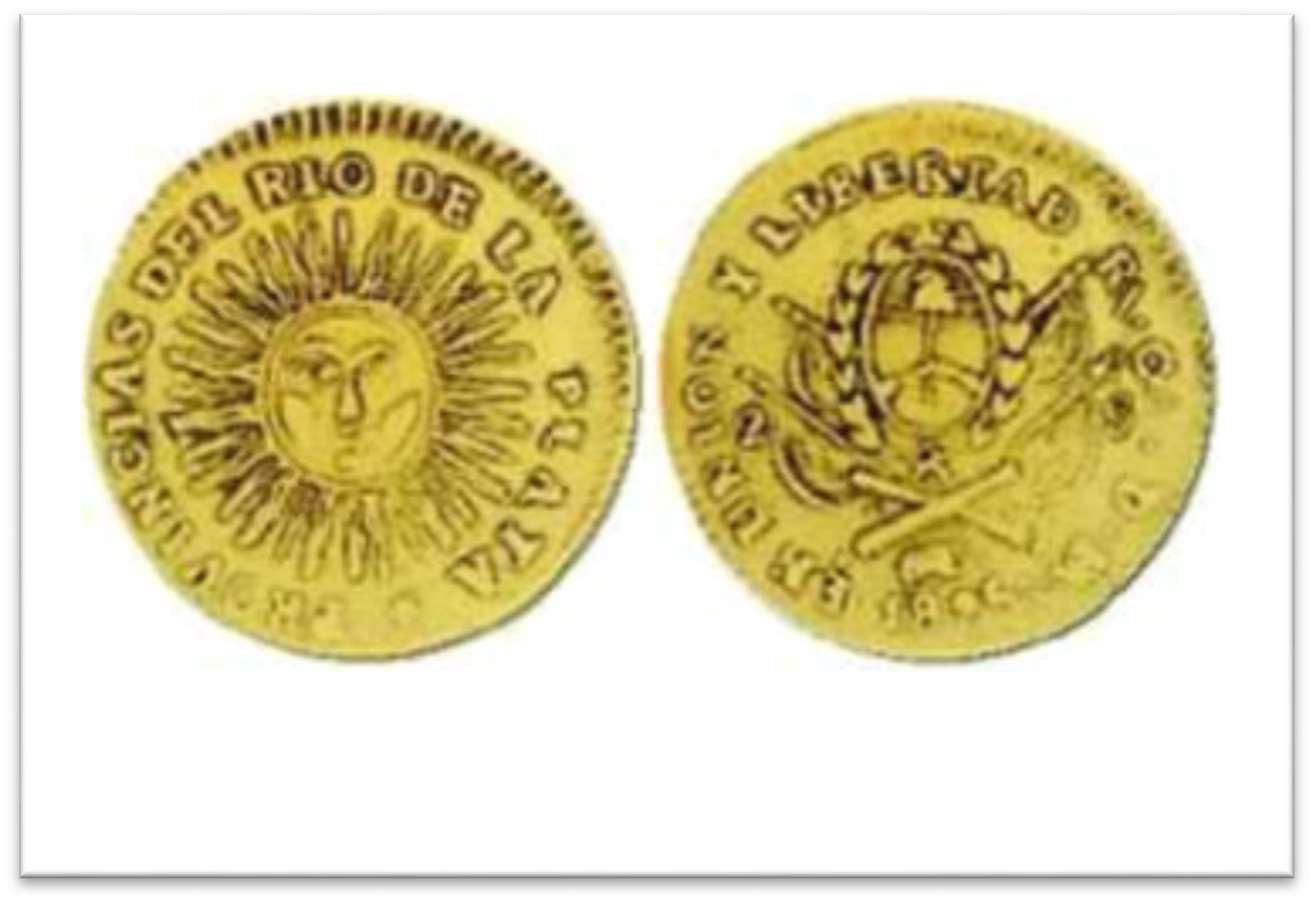
2E
At least 400 of the shares were in the hands of
Quiroga, which gives an idea of how involved he was in the affair. It has
always been taken as a matter of fact, at least from Ferrari’s 1962 book, that
the lettering on these coins stood for Compañía
de Buenos Aires (Buenos Aires Company). This seems debatable to me, since
although coins were meant to be of national circulation, the image of Buenos
Aires was not in high regard in the interior. Note the name of the company was Banco de Rescates y Casa de Moneda and
not Compañía de Buenos Aires. More
logically “Bas” could stand for “Banco de
Rescates,” hypothetically making the acronym CaDeBas stand for Compañía de
Banco de Rescates. Other possible interpretations are “Compañía Accionistas” (shareholders’ company) or “Casa de Amonedación” (house of coining,
i.e., mint), but there is no reliable documentation. In any case I feel sure
the lettering does NOT refer to Buenos Aires.
On November 15 Juan Fernandez Molina started as the accountant and continued up to August 1826. In January of that year appears the clerk Mariano Alvarez, who had worked in Potosí and Córdoba and appeared in many documents such as in the recognition of the counterfeit coins from Salta and in the report for the establishment of the never-accomplished second mint in Córdoba in 1818, together with Don Jose Arroyo (the director of the Mendoza mint).
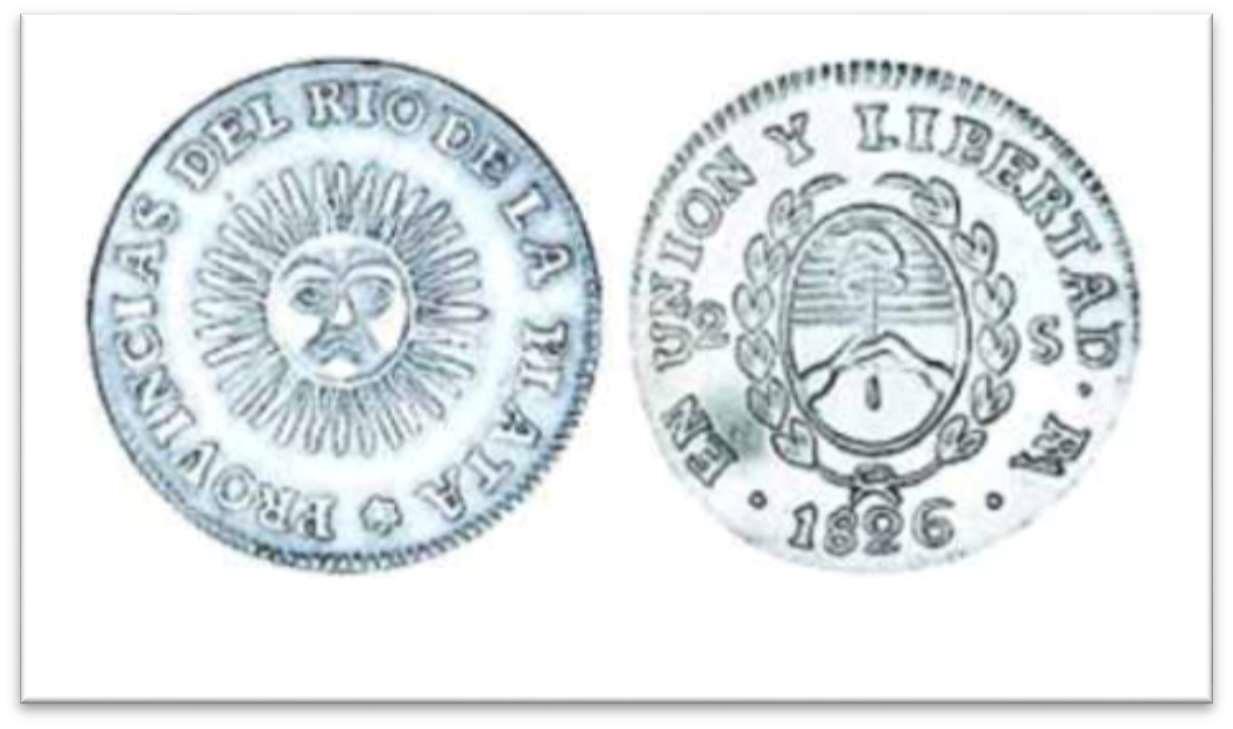
2S 1826 WITHOUT P
Regarding the assayer, thanks to Cunietti we
know that he was Don Manuel Piñeyro y
Pardo, who started his career in Potosí in 1810, after which he went to La
Rioja and founded the local smeltery. In 1815 he was moved to Córdoba, as requested
by governor Diaz, to install the first mint. After its closure, he was the only
employee who kept his salary as guardian of the tools, which are believed to
have been moved to La Rioja during Dávila’s government, thanks to efforts made
by Castro Barros. It is very probable that Don Manuel was in La Rioja for some time before, but there is no
evidence except for a request asking for his transfer from Córdoba in 1822. The
president of the administrative board, Jose Benito Villafañe, was the former
governor and mayor of the capital city, and a very close friend of Facundo
Quiroga.
On April 18 there is record of the first
arrival of amalgam to begin the coinage, which the clerk recorded as 3720
pieces of 2 soles. It is believed that from this date the pieces bore the letter
P for the assayer, and before that they were minted without assayer-mark;
although this sounds reasonable, it is not a matter of record.
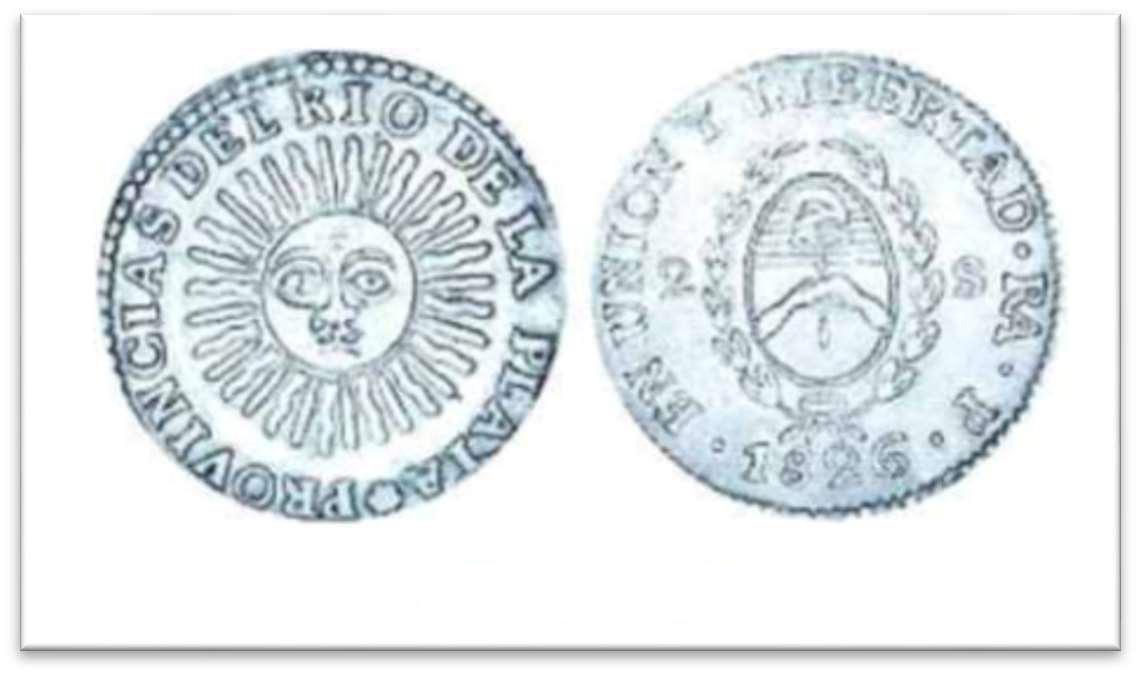
2S 1826 with P
On May 2 the first 318 pieces of 2 escudos were
issued; being the first ones, they were probably the variety without P. In
June, the 8 reales and first onzas (8
escudos) from La Rioja appeared.
Some time ago in an old collection an unknown variety of 8 reales appeared. In the monumental
“Quiroga Archive” digitized by the by the Ravignani Institute we find that, on
June 15, Villafañe sent two pieces of 8 reales, saying that six have been
minted as proofs and the next would come out better. Note in the photo we can
see the lack of points in the borders, clearly relating to 1813 and 1815 pieces
if we take into account that the main workers here had worked in Potosí. We
undoubtedly believe this photo is one of those rare samples:
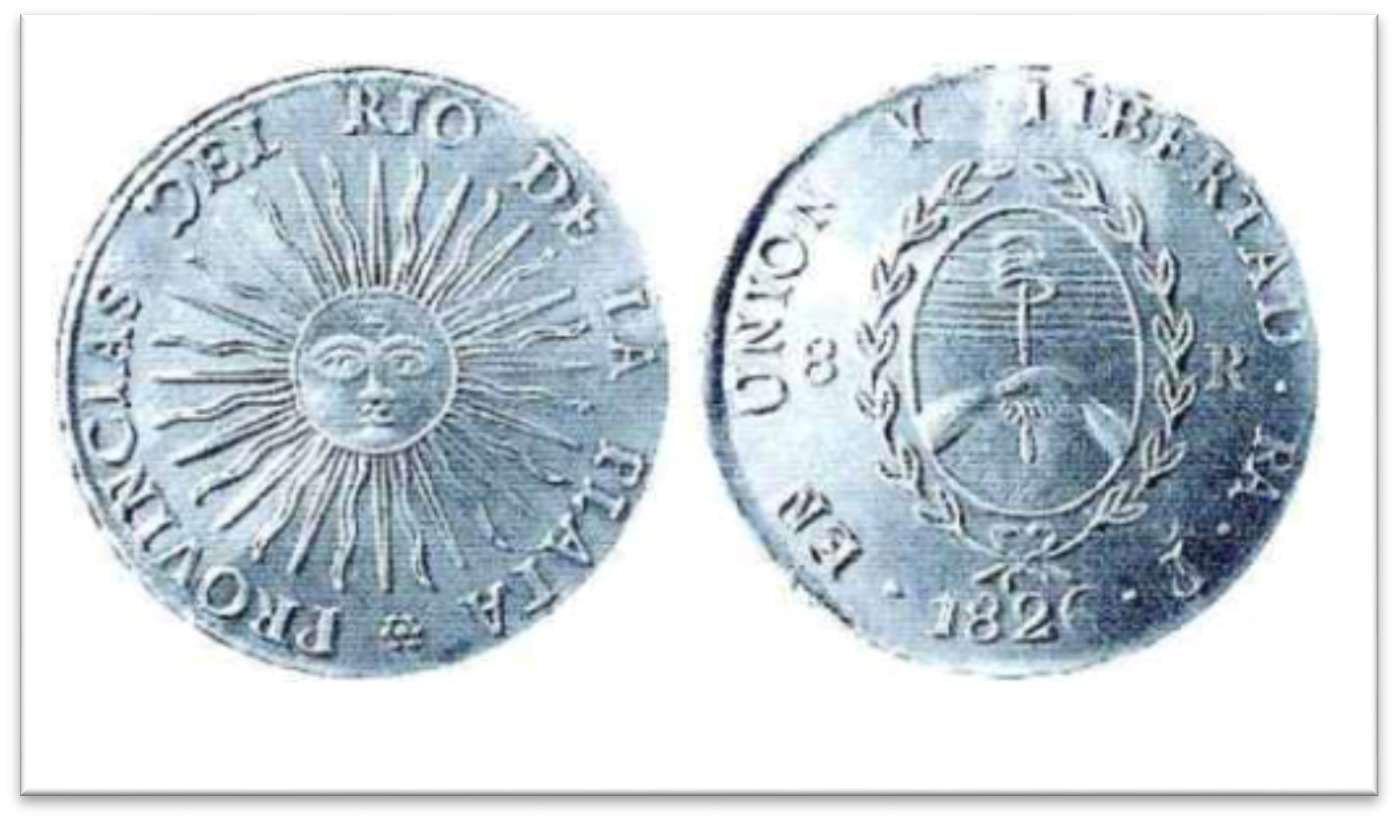
ENSAYO
In January 1826 in Buenos Aires the Congress tried
to create a National Bank exclusively entitled to mint coins in all the
territories of the country. After a long discussion, a new bank was authorized
to make an operation with La Rioja to nationalize the mint. It should be
considered that many authorities in the new bank were shareholders in the
company entitled to mint in La Rioja, and were part of an economic group led by
Braulio Costa.
On July 12 the members of the shareholder
company signed an agreement with the National President Bernardino Rivadavia passing
the establishment of the bank for the sum of 250 thousand pesos in current
currency to be paid in 2-1/2 years with an annual interest rate of 6%. This was
the fiduciary money issued by the Bank of Buenos Aires, bank notes that had diminished
credit and only circulated for a short time in some provinces, not including La
Rioja and a few in the north. This situation meant an insurmountable obstacle
for business, leading to the almost immediate rejection.
On September 18 La Rioja’s legislature passed a
law in which the Republic’s president was not recognized, repealing the law
that created the National Bank in the territory, and on January 15 the
congressmen left parliament. In June, Rivadavia quit, Vicente Lopez y Planes became
the temporary president, and Buenos Aires was given back its autonomy,
fostering civil war and provincial autonomies. On August 12 Manuel Dorrego was
elected Governor and, four days later, Lopez y Planes quit.
:: How did this quarrel start? ::
On November 24,
1823, a decree by the governor of Buenos Aires, Martin Rodriguez, authorized
the Minister of International Relations and Government, Bernardino Rivadavia,
to encourage the formation of a society in England to exploit the gold and
silver mines in Provincias Unidas. The
same day, Rivadavia wrote to Hullett Hnos., the company that had issued decimos (copper coins) for Buenos Aires,
to form the society.
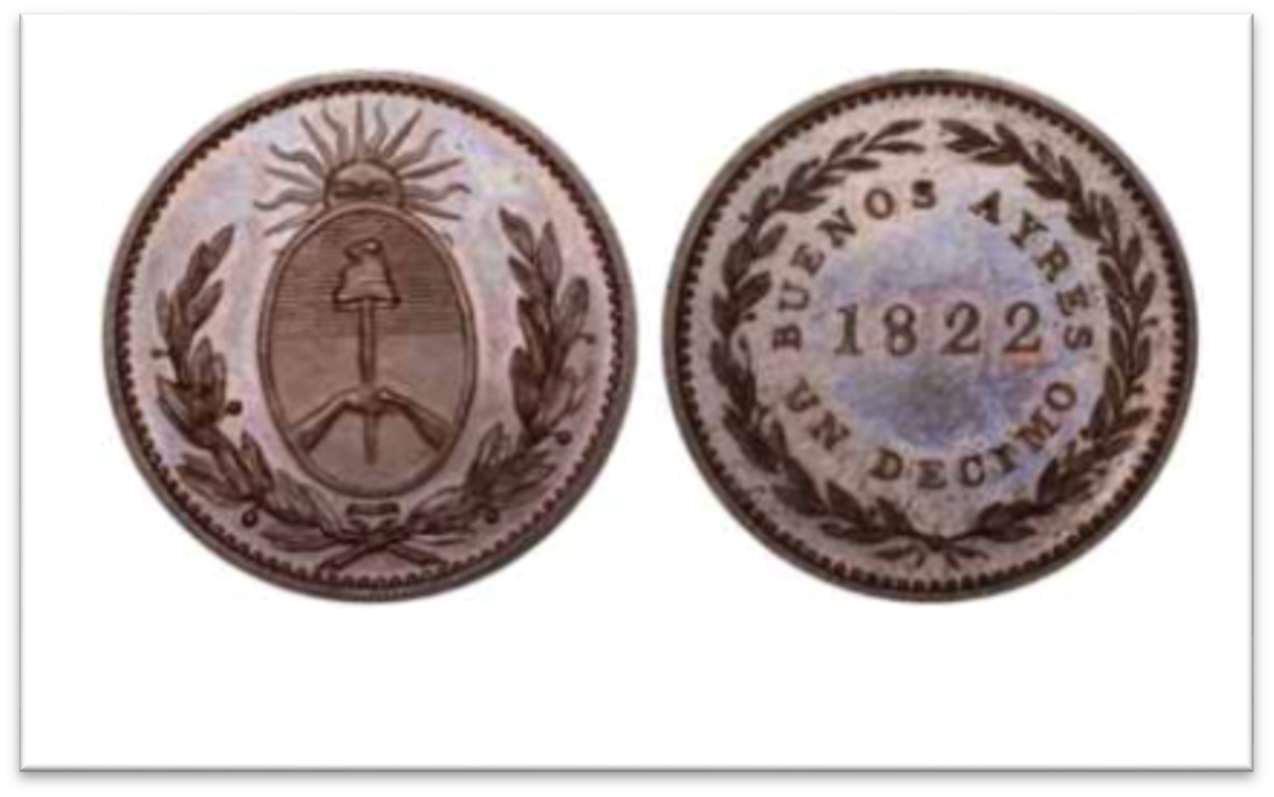
DECIMO BA
On December 11 the treaty for the “Sociedad de Minas del Río de La Plata” (Society
of Mines of the River Plate) was signed, and on April 6 John Hullett was
appointed Consul General for the United Kingdom. Meanwhile the Famatina Mining
Company was headed by Braulio Costa of Costa Holdings, a shareholder in the Banco de Descuentos (discount bank), Banco Nacional (national bank), all of
whom were partners in securing The Baring Loan, registered shareholders of
public credit (Don Braulio was the
first president), and involved in all kinds of profitable activities of the
time. The group included such names as Marcelino Carranza, Carlos del Signo, Ruperto
Albarellos, and many more.
On October 13, 1824, Costa’s company got a
contract with the government of La Rioja and was exclusively entitled to
exploit the minerals of the province for 25 years. It was explained that all
the amalgams must be coined in the provincial mint except for the ones that
could not be collected there. On November 18, Ventura Vazquez, an active
negotiator for the group, was appointed as deputy representing La Rioja in National
Congress. Congressional sessions began January 23, 1825, so it is clear how
relevant the mint was for La Rioja.
From February, controversies between both
companies, through Rivadavia and Costa, began in the London stock market and in
Argentina. Both offered shares and criticized each other, a topic that could be
extended in a separate article. In May, Costa and Vazquez travelled to La Rioja
to talk to Quiroga to interest him in the future company and Ramoncito, Quiroga’s
son, moved to the capital and was hosted by Costa in his house, and event that reveals
the close relationship between them (note the statute of the Banco de Rescates y Casa de Moneda is
dated July 30).
A document dated September 10, 1825, shows that
La Rioja rejected a solicitation by the government of Buenos Aires for the
exploitation of some mines in the province by the company “Rio de La Plata”, alleging they had already signed a contract with
the company “Famatina.”
For the date 1827 we know of only 8 reales,
with the same varieties as the ones from 1826; however, the abundance of pieces
of 2 soles of 1826 make us suppose that they continued being minted after that
date. The Gaceta Mercantil in
December of 1828 reported the operation of a new screw press that started its
activity with the striking of 330 ounces on November 10, probably the scarce
coins showing 1828 over 6. We should remember that in this year Dorrego, who
had a great relationship with the province, came to power.
For the date 1828 we find 8 escudos and 8
reales, both more abundant, and for the first time, 4 soles. Note the
difference in denomination from the 2 and 4 reales (soles versus reales). While
we have no explanation for it, it is clear by their general condition that both
values circulated profusely, in contrast to the 8 reales that were used only for
big transactions or holdings. On December 1 Dorrego was overthrown by Juan
Lavalle and executed with no previous judgment on December 13, leading to great
shock in all the interior of the country and giving rise to a civil war.
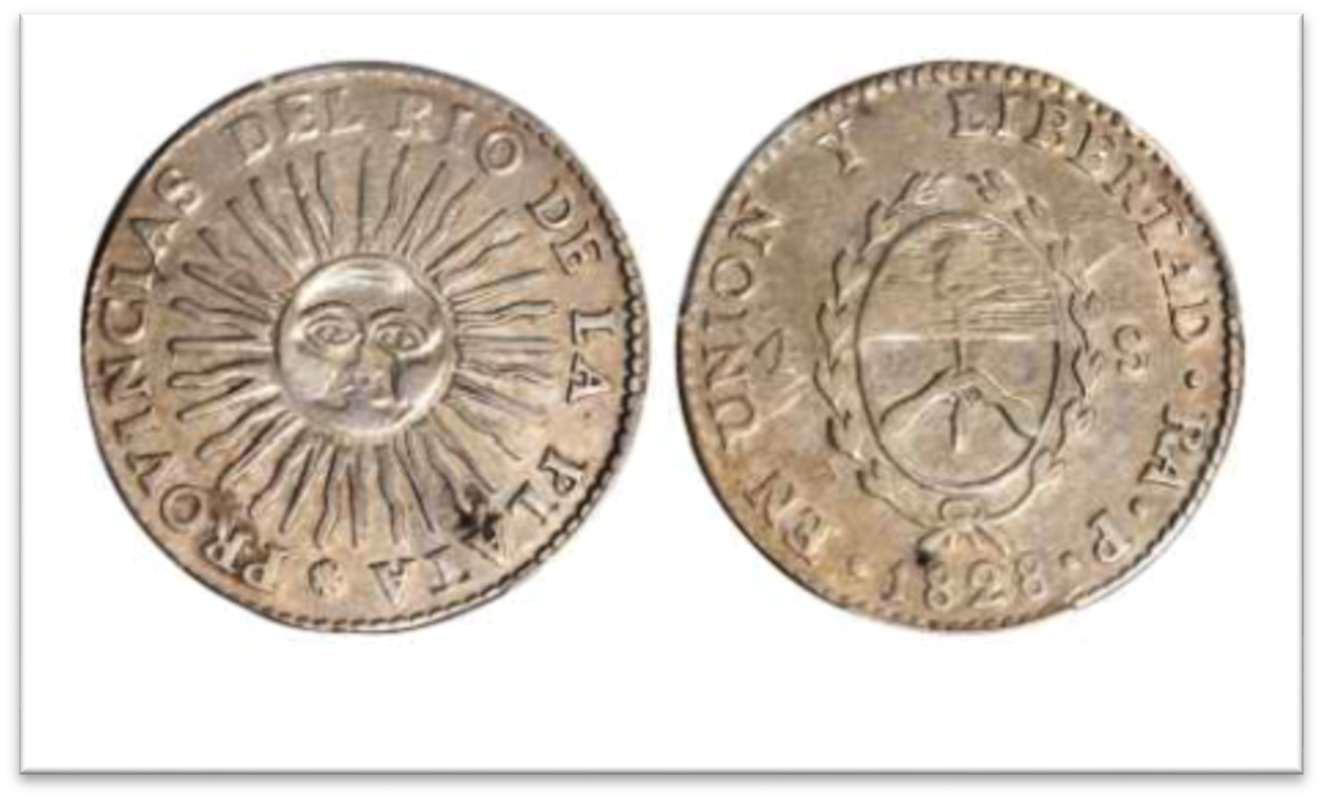
4 SOLES
In 1829, General Jose Maria Paz overthrew
Bustos in Córdoba. Quiroga, after being defeated in “La Tablada” in June, ordered an exodus of all the inhabitants of
the capital city together with cattle and food supplies, which was carried out on
July 22. Under the circumstances, all the elements of the mint were buried and
hidden, and would not be discovered by the unitario
governor Lamadrid until August 1830, but that is another story.
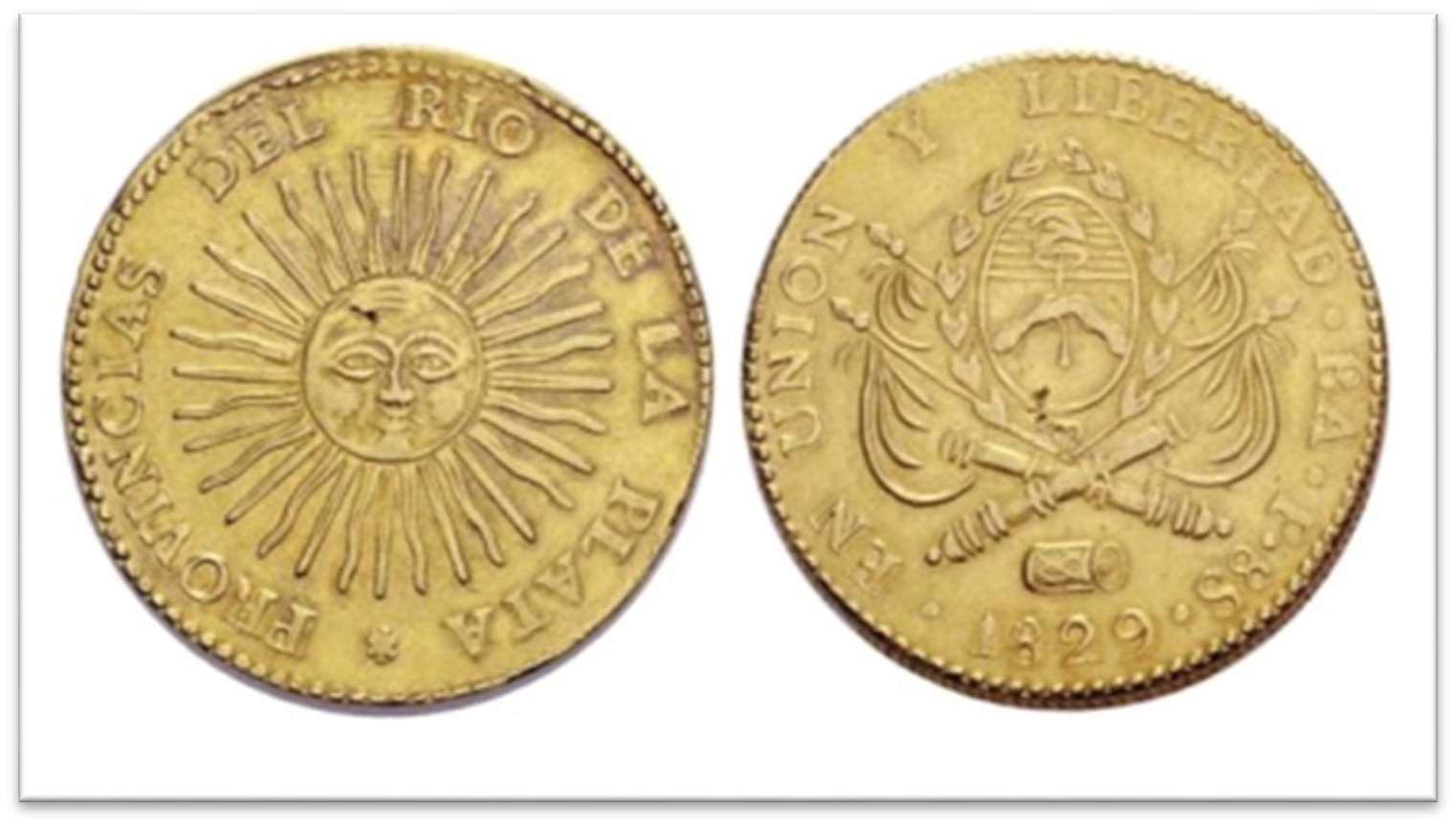
8E 1829
On December 11, 1829, the population went back
to the city. In this year only the rare 8 escudos were minted, of which less
than five are known. On September 20 the Sociedad
del Banco de Rescates y Casa de Moneda of La Rioja officially came to an
end.
(1) In the early years of Independence, federalist caudillo Juan Facundo Quiroga entered the provincial army and quickly rose to command. In 1821 a division led by Francisco Solano del Corro, a rebel from the Ejércíto de los Andes, tried to pass through La Rioja and was stopped by its governor, Francisco Ortiz de Ocampo, but eventually took over. Del Corro’s second-in-command, Francisco Aldao, rose up against del Corro and soon after that Quiroga and his troops from neighboring San Juan saved the day by defeating Aldao, his first victory and the beginning of his influence there. Quiroga installed Nicolas Dávila as the new governor, but in time Dávila came into conflict with the legislature and with Quiroga himself.
(2) A form of silver bullion that occurred after purification by heating in a bell-shaped mold with central post, after which the outer surface was cut into octagonal cross-section, producing a pineapple-shaped cylinder with granular sides.
:: BIBLIOGRAPHY ::
FERRARI, Jorge N. Amonedación de La Rioja. (Buenos Aires, 1962.)
MITCHELL, O. Amonedación de la provincia de La Rioja. (Buenos Aires, 1974.)
JANSON, Hector Carlos. La moneda circulante en el territorio
argentino 1574-2015. (Buenos Aires, 2016.)
SEGRETI, Carlos. Moneda y política en la primera mitad del
siglo XIX. (Buenos Aires, 1975.)
CUNIETTI-FERRANDO, A. J. “El ensayador Don Manuel Piñeyro y Pardo” in Revista A.N.A. issue 46/47. (Buenos
Aires, 1965.)
GALMARINI, Hugo Raul. “Braulio Costa y sus negocios” in Revista Todo es Historia issue 78. (Buenos Aires, 1973.)
FURLONG, Guillermo. Castro Barros su actuación. (Buenos Aires, 1961.)
Published in Daniel Franck Sedwick´s Treasure Auction #19